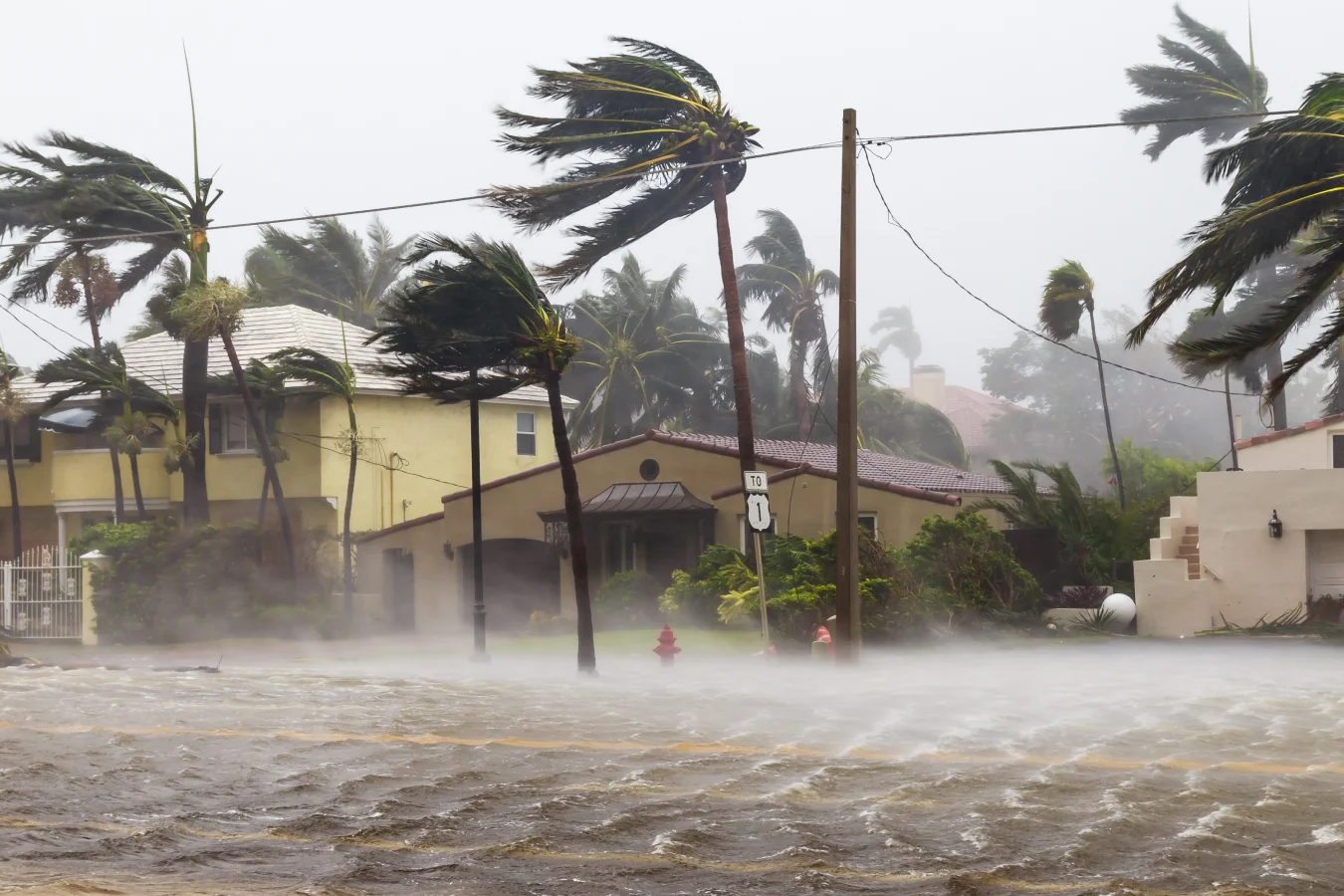
For commercial property operators, the cost of a natural disaster isn't a single line item. It cascades from structural repair into insurance claims, tenant disruption, vacancy exposure, and operational downtime. And in today's environment, all three components of that cascade are getting more expensive simultaneously.
Threat 1: Insurance Costs Are Consuming More of the P&L
In Florida and Texas, commercial real estate insurance premiums have risen as much as 200% since 2018. In the most-impacted properties, insurance now represents up to 13% of total property revenue, nearly double the 7% share in 2018.
In 2024, natural disasters resulted in $417 billion in global economic losses, with insured losses hitting a record $154 billion.
Major insurers are pulling back from high-risk markets, raising deductibles, and adding exclusions. Operators who demonstrate strong disaster preparedness and clean claims documentation are better positioned to negotiate coverage terms.
Threat 2: Vacancies Are Already Under Pressure — Disaster Downtime Makes It Worse
Commercial real estate vacancy rates have been under structural pressure across most asset classes. In that context, disaster-related downtime is not a neutral event: it actively erodes the leasing position of affected properties.
Commercial tenant turnover costs property owners an average of $31,927 per departing tenant. With commercial leasing activity still running below pre-pandemic benchmarks in many markets, the cost of losing a tenant to a competitor with a stronger operational resilience posture is compounded.
Commercial tenants, particularly national brands and institutional occupants, are increasingly factoring business continuity into leasing decisions. A property that is slow to recover from a weather event, or that cannot demonstrate a clear operational resilience posture, faces a harder path to retention and re-leasing.
Portfolios that can demonstrate structured response capabilities, with pre-staged vendors, real-time monitoring, and reliable recovery timelines, have a tangible advantage in tenant retention conversations.
Threat 3: Vendor Availability Is the Most Predictable Bottleneck and the Most Overlooked
Commercial restoration projects carry an average invoice value 3.5x higher than residential work. In disaster scenarios, operators who don't have pre-staged relationships face longer sourcing windows and higher rates.
The solution isn't vendor speed, it's vendor positioning. Pre-staging relationships and aligning scopes before regional demand peaks eliminates the bottleneck before it develops.
How to Address All Three Before the Next Event
On insurance: build the documentation case in advance.
Better documentation produces better claims and, over time, a stronger negotiating position with insurers. Real-time documentation connected to verified event timelines is one of the highest-leverage investments in disaster response infrastructure.
On vacancies: make resilience visible.
Portfolios that can demonstrate structured response capabilities — pre-staged vendors, real-time monitoring, rapid recovery timelines — have a tangible advantage in tenant retention and leasing conversations.
On vendor gaps: pre-stage, don't scramble.
The window between a storm forecast and landfall is when vendor capacity is still available. Operators who use that window consistently outperform those who begin sourcing after impact.
How Lessen Closes the Gap
Lessen's platform layers weather intelligence, asset-level service history, and a nationwide pre-vetted vendor network into a single operational view, so when a weather system develops, response is organized before the first work order is filed.
Whether you manage retail locations, healthcare facilities, financial service branches, or industrial assets, Lessen builds the pre-event preparation, vendor coordination, and documentation infrastructure that protects your portfolio before, during, and after a weather event.
Lessen helps commercial property operators build structured disaster response into daily operations so when a storm hits, your vendors are already positioned, your properties are prioritized, and your documentation is already running. Talk to a Lessen expert about your commercial portfolio.
Ready to see it in action?
Tell us how your portfolio runs today, and we'll show you exactly where Lessen fits.