
The After-Hours Maintenance Crunch: Why a Shrinking Trades Workforce Is Reshaping Emergency Response
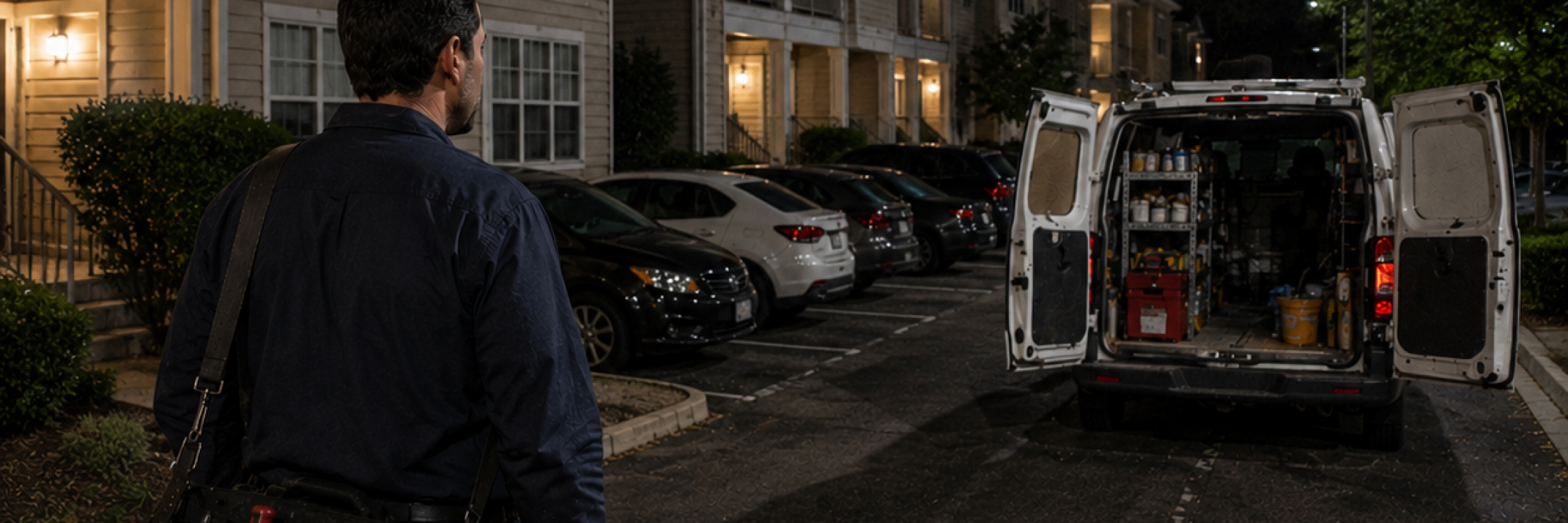

It is 11 p.m. on a Friday and a resident’s water heater has failed. Ten years ago, the question was simple: who is on call? Today, for a growing number of property managers, the honest answer is often no one. After-hours maintenance has quietly stopped being a scheduling problem and become a workforce problem, and the data on the skilled trades pipeline explains why.
A Shrinking Bench, Even During "Growth"
On paper, demand for trades labor is strong. The U.S. Bureau of Labor Statistics projects 8 percent growth for HVAC and refrigeration mechanics through 2034, much faster than average, with roughly 40,100 openings a year. But the BLS is candid about where most of those openings come from: workers retiring or leaving the trade, not net-new headcount. The pool is not growing nearly as fast as demand for its time.
Multifamily operators are feeling this first. Reporting on the sector from Multifamily Dive is blunt: the maintenance technician role remains the hardest on-site position to fill, even as other roles like leasing staff have gotten easier to staff. One operator put it plainly: there are currently more maintenance professionals interested in leaving the profession than entering it. Smaller and rural markets have it worse, because the experienced technicians they do have can take their skills to construction, hospitality, or another market entirely.
Why This Hits After-Hours the Hardest
A thin bench is manageable Monday through Friday, 9 to 5. It breaks down at 11 p.m., on a holiday weekend, or in a snowstorm, exactly when demand for emergency response spikes. A single-market portfolio relying on one or two on-call technicians has no redundancy left to lose. When that technician is unavailable, sick, or simply burned out from carrying the on-call rotation alone, property managers are left calling around for whoever will pick up, often at premium emergency rates, sometimes from vendors they have not fully vetted.
- Slower response times translate directly into resident complaints, poor reviews, and non-renewals. The moments residents remember most are the emergencies, not the routine visits.
- Thin after-hours coverage pushes costs up, since scarce availability commands premium rates precisely when leverage is lowest.
- Desperation dispatch, using whoever answers the phone, raises quality and liability risk at the worst possible moment.
Adapting the Model, Not Just the Roster
The property managers navigating this well are not solving it market by market. They are moving away from single-market, single-technician on-call models toward pooled, technology-coordinated vendor networks that can flex across geographies, so an emergency in one metro is not dependent on the availability of one person in that metro. Centralized intake and triage also matters: routing a call to the right trade immediately, 24/7, rather than losing time to a voicemail, shrinks the window where a manageable issue becomes resident-facing damage.
This is precisely the structural answer the labor data points to. The shortage is not going to reverse on its own timeline. The fix is redundancy and reach, built before the next midnight call, not after it.
Is Your After-Hours Coverage Built for the Labor Market You Actually Have?
Lessen was built around exactly this kind of redundancy. A single national vendor network, coordinated through one platform with 24/7/365 intake, means an after-hours emergency in any market is never dependent on a single technician’s availability. See how Lessen keeps after-hours emergencies from becoming staffing emergencies →
- This is my list