
Prioritize, Budget, Execute: A Smarter Approach to Multifamily Capital Projects
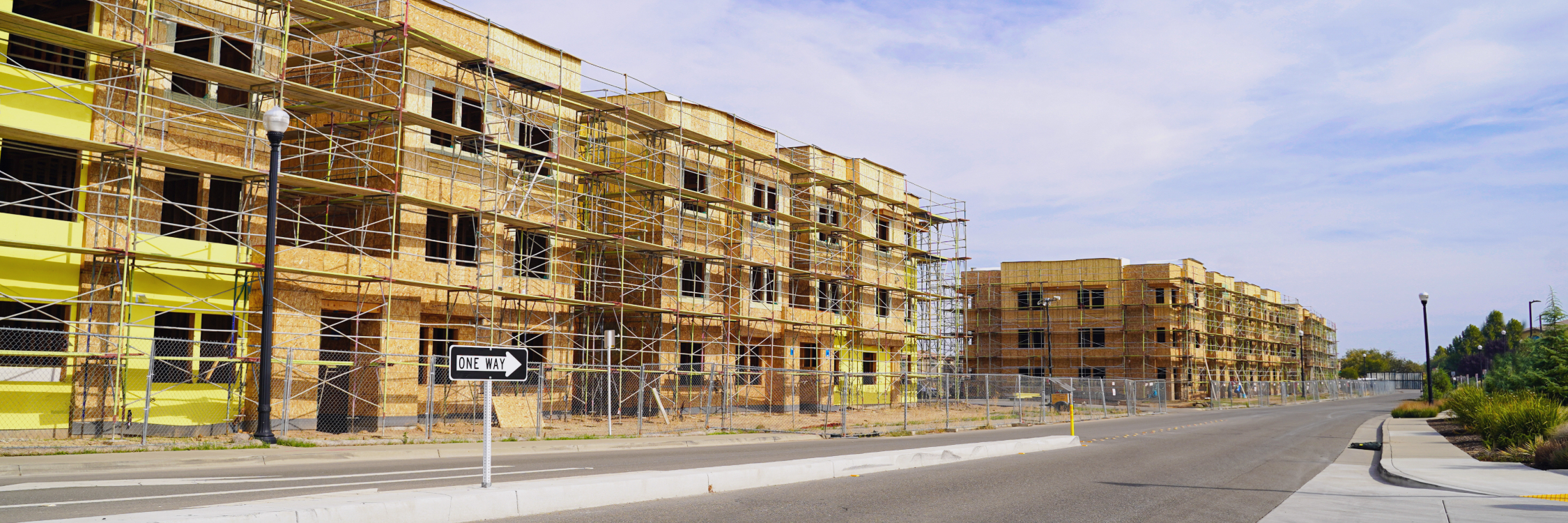

Capital projects are where multifamily portfolio strategy meets execution risk. A roof replacement, clubhouse renovation, or parking lot resurfacing might look like a line item on a budget spreadsheet, but at scale across a portfolio of properties in different markets, each project carries its own permitting timeline, vendor pool, and cost curve. For portfolio executives, the challenge isn't approving capex, it's sequencing it in a way that protects NOI while the work gets done, and doing that consistently in a business where 43 cents of every rent dollar collected already goes toward operating expenses like maintenance, insurance, and utilities, according to National Apartment Association research. There isn't much room in that margin for a capex plan that runs hot.
The first discipline is prioritization. Not every deferred maintenance item deserves this year's budget, and not every value-add renovation will move rent the way a pro forma assumes. Portfolios that manage capex well typically score projects against a small set of criteria: life-safety and code exposure first, asset preservation second (the roof, the envelope, the mechanical systems that get more expensive to defer the longer they wait), and rent or occupancy lift third. A clear scoring framework keeps regional teams from lobbying for pet projects and gives ownership a defensible reason for what gets funded this cycle and what waits until next.
Budgeting is where good prioritization can still go wrong, and the industry has the numbers to prove it. Large capital projects typically run up to 80 percent over budget and 20 percent longer than planned, according to McKinsey's research on capital project delivery, and multifamily capex is just as prone to scope creep and change orders as any other asset class. A project budgeted in isolation rarely accounts for the disruption cost of resident turnover, temporary relocation, or lost amenity revenue during construction. Building a real contingency into every project, and tracking spend against budget at the portfolio level rather than the property level, catches drift before it compounds across a dozen simultaneous projects. As a budgeting benchmark, industry standards recommend funding capital reserves at 2 to 4 percent of portfolio replacement value annually; portfolios that consistently underfund that reserve are the ones showing up in next year's capex plan with a much bigger, much more urgent problem.
Vendor selection is the operational bottleneck most portfolios underestimate. A capex plan is only as good as the contractor capacity behind it, and sourcing, vetting, and managing general contractors and specialty trades market by market consumes bandwidth that regional teams don't always have. Centralizing vendor management, and holding every market to the same qualification and performance standard, is what keeps a twenty-property renovation program from becoming twenty different experiences with twenty different risk profiles.
Timing matters as much as budget. Capital work that disrupts resident access to a unit, an amenity space, or parking during peak leasing season carries a cost that rarely shows up in the project budget itself: lost renewals, negative reviews, and leasing team pushback that slows absorption on the units nearest the construction. Portfolios that sequence capital projects around seasonal leasing patterns, and that build resident communication into the project plan from day one rather than as an afterthought once complaints start, protect occupancy while the work gets done. That communication plan is also where a capex program either builds or erodes trust with the property teams who have to live with the disruption on-site, long after the executive who approved the budget has moved on to the next project.
None of this matters without ROI tracking that closes the loop: comparing actual spend and actual lift, in rent, retention, and reduced work orders, against what was underwritten at approval. That's the data that makes next year's capex plan sharper than this year's, and it's the difference between a portfolio that treats capital projects as a series of one-off approvals and one that runs capex as a program.
Lessen works alongside portfolio executives as a capex execution partner across markets, from prioritization and budgeting through vendor management and ROI reporting. If your team is building or refining a capital project program, partner with Lessen before your next planning cycle.
- This is my list