Most commercial HVAC maintenance budgets are built around summer. Facilities teams schedule inspections, order parts, and staff up before peak cooling season, because a rooftop unit that fails in July is impossible to ignore. Fall gets treated differently. Once cooling demand tapers off, the attention that went into keeping units running through summer tends to taper off with it, and the season in between summer and winter starts to look like a quiet stretch on the maintenance calendar.
It isn't. Fall is the point where a commercial HVAC system shifts its priorities from cooling to heating, and that shift is exactly when problems cooling never exposed start to surface. Per Lessen's commercial HVAC maintenance checklist, fall functions as the second major intervention point in the HVAC maintenance schedule. Issues that don't affect cooling performance at all, like ignition failures, heat exchanger degradation, or inconsistent gas flow, can surface quickly once heating demand actually begins. A system that ran fine all summer can still be carrying a problem that only heating season will reveal.
What a Real Fall Pass Has to Cover
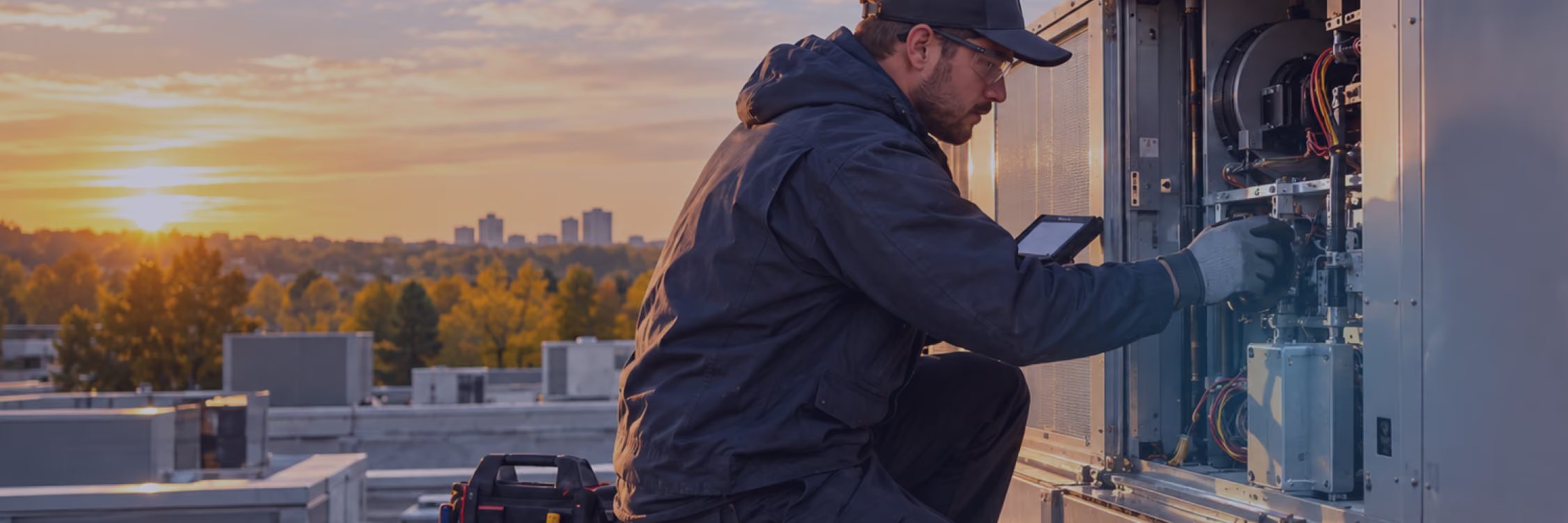
A thorough fall maintenance pass has to look past the parts that only matter for cooling. Heat exchangers and heating elements need to be inspected directly, since a compromised heat exchanger is both a performance issue and, in gas-fired systems, a safety issue. Ignition systems and startup sequences need to be tested under real conditions, not assumed to work because they worked last winter. Thermostats and controls need to be verified for a clean switch between cooling and heating modes, since a thermostat that doesn't switch cleanly is a common, avoidable cause of a system that seems to fail on the first cold morning of the season.
Alongside that, gas connections need to be checked, safety controls and shutdown systems tested, filters replaced, ductwork inspected for leaks or restrictions, and system calibration validated. None of this is unusual work. What matters is that it happens now, while there's still time to correct what a fall inspection finds, rather than after the first sustained cold stretch has already put the system to the test.
For a single building, that list might get worked through informally, whatever tasks whoever is on-site remembers to check. For a portfolio spread across dozens or hundreds of locations, informal doesn't scale. Without a defined fall scope applied consistently at every site, some locations get a thorough pass and others get whatever time is left over, and the sites that get skipped are rarely the ones that can least afford it.
Why the Cost of Skipping It Shows Up in Winter
The cost of skipping this pass doesn't show up in the fall. It shows up in winter, and it shows up worse than it would have in September. Once heating season is underway, equipment failures are more urgent by nature, and the conditions outside make things harder. Snow, ice, and limited site access can delay a service response exactly when a system needs one most. A problem that would have been a routine fall repair becomes an emergency call placed in bad weather, with everything that implies for cost, downtime, and how long it actually takes to get resolved.
That pattern shows up in independent data, too. An analysis of more than 65 million commercial HVAC service trips found that October, not summer, is the true peak season for HVAC breakdowns, driven largely by furnaces and boilers that have sat dormant since spring being switched back on for the first time and failing on that first activation. The same analysis found September to be a comparatively quiet stretch, which is precisely the window a fall maintenance pass is meant to use. A separate 2025 downtime survey, covered by FacilityExecutive, found that 22% of HVAC downtime events cause more than $1,000 in lost revenue across education, healthcare, and hospitality operations alone, a reminder of how much is riding on catching a problem before that first cold snap rather than after it.
For a portfolio spread across dozens or hundreds of locations, that risk compounds. A maintenance program that runs on a consistent seasonal cycle catches these issues at the same point, site to site, instead of relying on whichever location happens to call in first. In one Lessen-managed national retail portfolio, a structured preventative maintenance program built around this kind of seasonal discipline produced a 37% reduction in comfort-related service calls and reached 65% of total maintenance work completed proactively rather than reactively, meaning the majority of maintenance activity was planned and scheduled in advance, not triggered by a comfort complaint or a system that had already failed. That result didn't come from doing more work. It came from doing the right work at the right point in the calendar, before heating season forced the issue.
Fall is a narrow window for catching the heating-side issues that a summer of running fine never actually tests, and the portfolios that treat it as a real intervention point are the ones that avoid the emergency calls once winter weather sets in. Lessen's commercial HVAC maintenance services build that fall pass into a consistent, portfolio-wide program, so every site gets the same heating-readiness scope instead of whatever time happens to be left over.
See how Lessen keeps commercial HVAC portfolios ready for heating season →
Ready to see it in action?
Tell us how your portfolio runs today, and we'll show you exactly where Lessen fits.