CAPEX Projects
Capital projects, run at portfolio scale
From large-scope replacements to multi-site rollouts, Lessen manages capital project execution end-to-end, structured scheduling, volume-driven pricing, and asset data captured for the next decision, not just the current one.

One-off capital projects create portfolio-wide risk
Most commercial portfolios manage capital projects one at a time; a replacement here, a rollout there, each with its own vendor, its own pricing, and its own paper trail. Without a system connecting them, budget visibility, pricing leverage, and asset history all reset with every project.
Lessen manages capital projects as one governed program: structured scheduling, volume-driven execution, and every completed project captured back into the asset record that drives the next capital decision.
PROGRAM SCOPE
The full capital project lifecycle, managed in one program
From scope definition through asset capture, Lessen runs capital projects as a governed program, not a series of one-off jobs.
Scope & Site Assessment
Every project starts with a documented site assessment establishing existing conditions, code requirements, and defined scope before pricing is set.
Market-Density Execution
Projects are sequenced by market so vendor crews move from site to site efficiently, compressing timelines across multi-location rollouts.
Structured Scheduling & Project Visibility
A defined project calendar and status tracking replace one-off vendor coordination, so every stakeholder sees where each site stands.
Volume-Driven Pricing
Concentrated market capacity and portfolio-level project volume are used to negotiate pricing, instead of pricing each site as a standalone job.
Asset Capture for Lifecycle & Warranty Tracking
Every completed project updates the asset record (serial numbers, install dates, warranty terms), feeding the next repair-vs-replace decision.
Change-Order & Budget Control
Structured change-order review keeps scope creep visible and approved before it becomes unbudgeted spend.
Capital project work is only as good as the crew installing it
Lessen does not just connect you to capital project vendors. Every capital project vendor in your program comes from Lessen's managed network of 34,000+ vendors and is held to the same standard: continuously measured, performance-routed, field-verified, and accountable to documented quality requirements.
.jpeg)
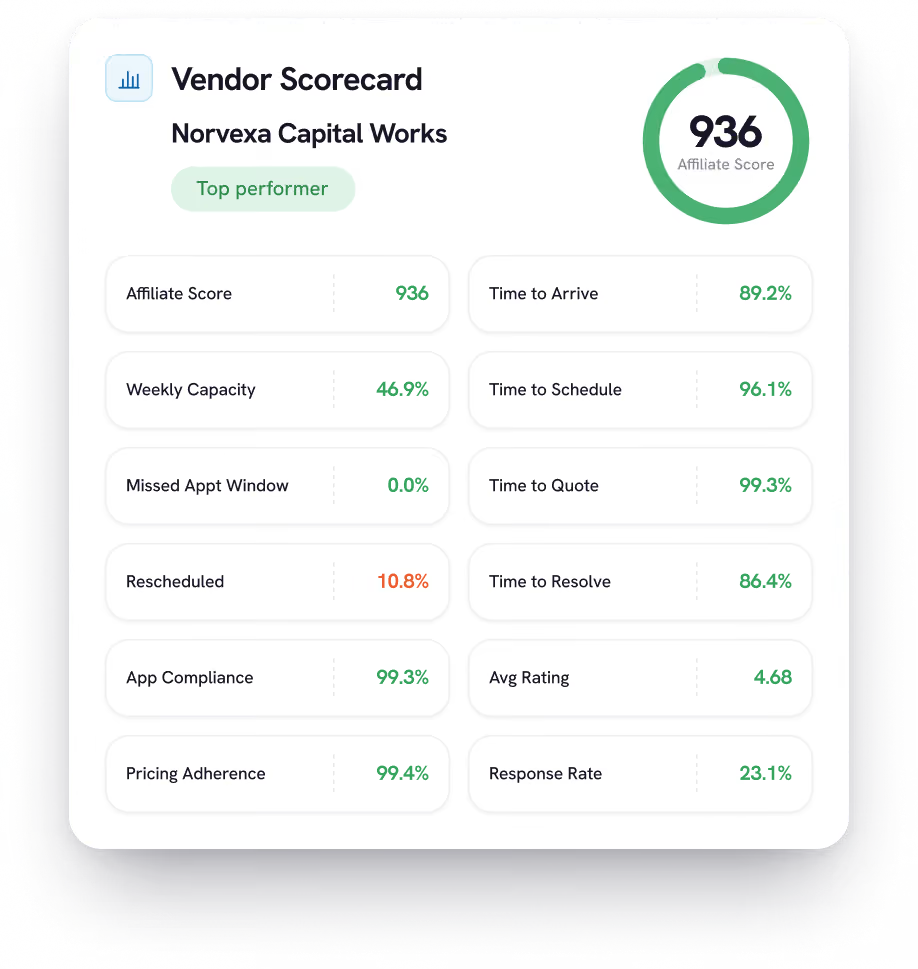
Measured continuously
Every vendor is tracked against Lessen's 19-metric live scorecard, so multi-install capital work is held to the same standard as a single-site repair.
Routed by performance
Market-density scheduling routes work to the vendors with the strongest documented track record in that trade and geography, not just whoever's available.
Verified in the field
Photo-documented, geo-verified completion on every install confirms the work matches the approved scope before the project closes out.
Intelligence where capital decisions get expensive
Better scoping from the start
Property- and unit-level asset records (serial-number validation, repair-vs.-replace recommendations, and warranty checks) inform which sites get prioritized this cycle and which get deferred.
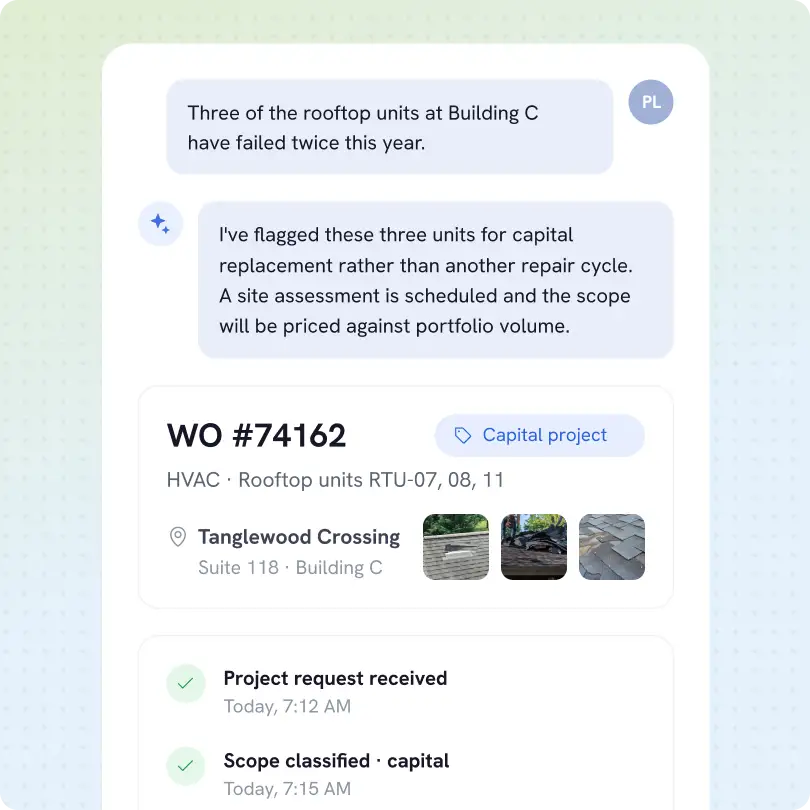
The right call, backed by data
Aiden tracks each asset's condition, lifecycle stage, and install history, so every repair-vs-replace decision is grounded in real asset data, not age on a spreadsheet.
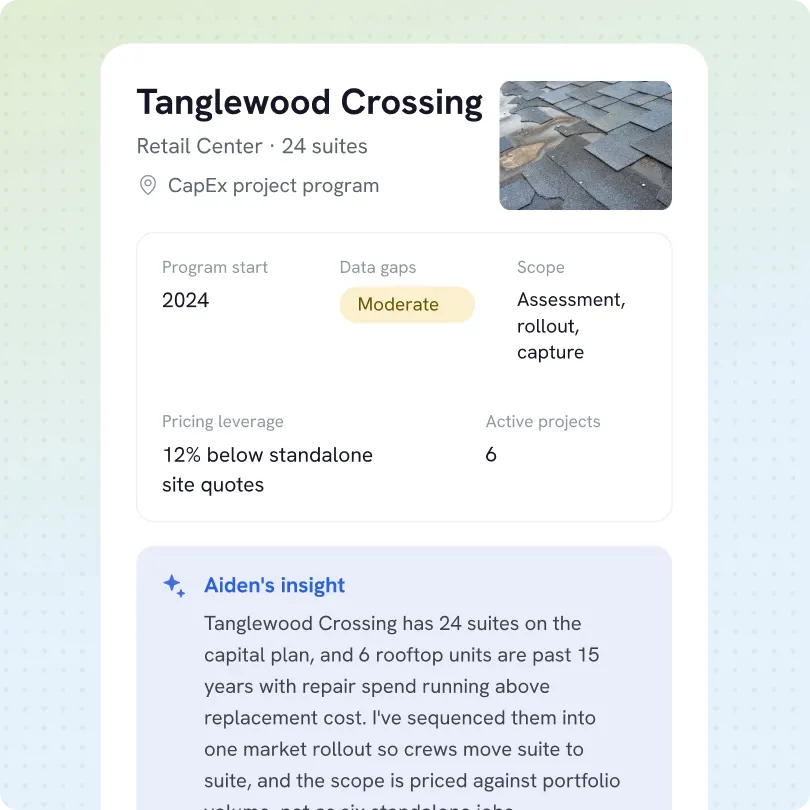
Nothing gets approved unchecked
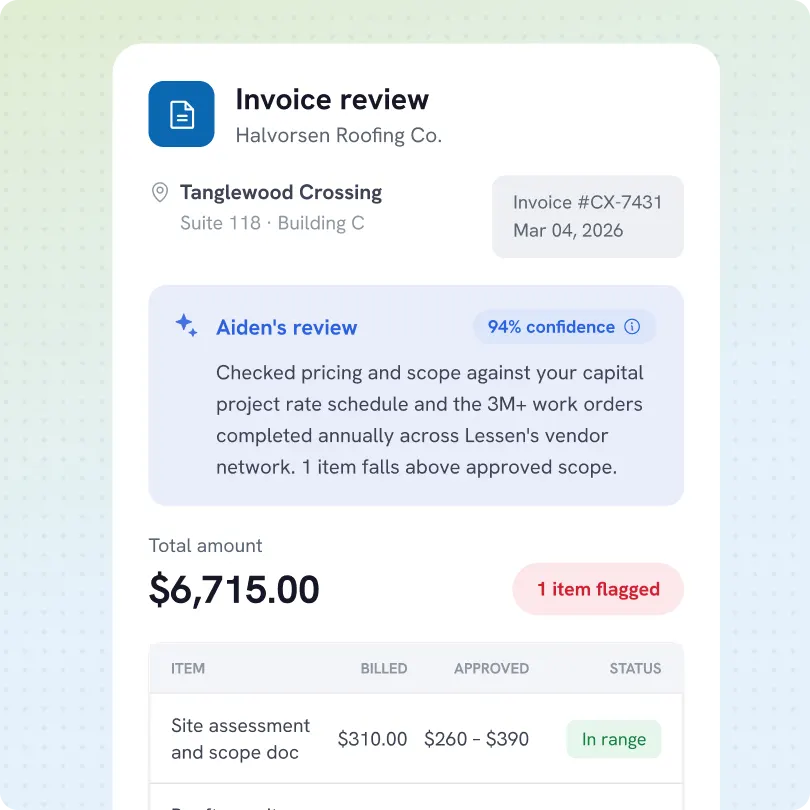
Aiden reviews every proposal, invoice, and change order against fair-market pricing before approval, flagging over-billing and scope creep before they reach the capital budget.

Capital project programs built around how each portfolio operates
.jpeg)
A capital plan that reflects real asset condition, not just age on a spreadsheet, protects the budget cycle it has to survive
.jpeg)
Remodels, equipment replacements, and storefront upgrades have to land between peak selling seasons. Planned capital work keeps stores open and on-brand while the project moves forward.
.jpeg)
Roof, dock, and equipment replacements can't stop throughput. Phased capital projects keep inventory protected and operations running while the work gets done.
CUSTOMER STORY
A national retail brand turned budget guesswork into governed capital planning
Challenge
Overestimated accruals were tying up budget that could have funded deferred and special capital projects, with limited real-time visibility into actual spend.
Solution
Lessen brought real-dollar spend estimation and governed reporting into the client's capital planning process, replacing inflated projections with data-backed numbers.
.jpeg)
48.5%
reduction in overestimated accruals
93%
accuracy in real-dollar spend estimates
Recovered budget redirected toward deferred and special projects
Frequently asked questions
How is a capital project priced differently from routine R&M?
Can Lessen manage capital projects across multiple markets at the same time?
How does Lessen help with year-end "use it or lose it" budget cycles?
Does completed capital work feed future planning and budgeting?
Can Lessen manage capital work triggered by an unplanned event, not a planned budget cycle?
Get in touch with our sales and support teams for demos, onboarding support, or product questions.
See how a capital program would run across your portfolio
One program, structured scheduling, asset data that pays off on the next decision.