
The Real Cost of Waiting: Why Proactive HVAC Replacement Beats Reactive Repair
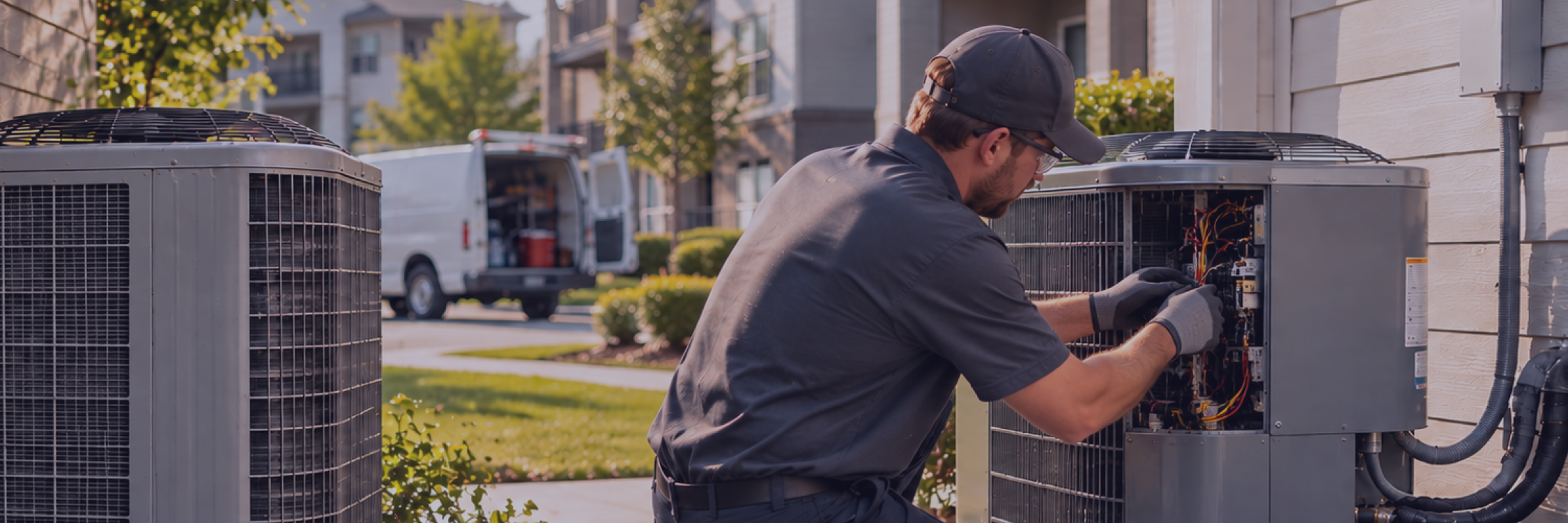

A reactive HVAC repair rarely settles the matter in a single transaction. Beyond the visible invoice is a second, less obvious cost: the missed service window, the resident complaint, and a system left one component away from its next failure. Across a portfolio of properties, this pattern compounds, and continuing to repair no longer functions as the economical choice it appears to be on any individual work order.
This post examines what proactive HVAC replacement actually costs against the cumulative cost of ongoing repair, and why a growing number of residential portfolios are electing to replace systems on a planned schedule rather than waiting for the next failure to set the timeline.
Repairs Compound Rather Than Resolve
On an aging system, one repair typically precedes another. A failing capacitor this quarter is often followed by a compressor issue the next season, and a refrigerant leak after that. Each service call carries its own dispatch fee, parts markup, and labor charge, none of which extends the system's remaining service life or reduces the likelihood of the next failure.
This dynamic is compounding for a structural reason as well. The U.S. Bureau of Labor Statistics projects HVAC technician employment to grow 11 percent between 2025 and 2035, considerably faster than the average for all occupations, with approximately 40,600 annual openings. Most of those openings will result from technicians retiring or leaving the trade rather than net workforce growth. In practical terms, the technician available for the next reactive repair call may take longer to reach a property than the one who completed the last one.
What Replacement Actually Costs
The primary reason continued repair wins by default is that replacement cost feels uncertain, while the repair estimate is already in hand. In practice, replacement pricing is more predictable than most operators expect, particularly when equipment and installation are sourced together rather than assembled piecemeal through local contractors.
Lessen's HVAC program bundles equipment procurement and installation through direct manufacturer relationships and collective purchasing scale, which keeps combined labor, material, and equipment pricing competitive and consistent by region and system size. Rates vary by market and tonnage, but a defined bundled figure, rather than an estimate, makes the comparison to a series of repair calls considerably more straightforward.
This is not a case for displacing a vendor relationship a portfolio already values. It is a case for backing that relationship with manufacturer-level pricing and a single accountable partner once full system replacement becomes the appropriate decision.
Third-party cost data supports this comparison. According to Angi's 2026 HVAC cost guide, a single air conditioning repair typically costs between $450 and $2,000 against a full replacement cost of $3,800 to $7,500 nationally, and furnace repairs range from $130 to $1,200 against a $2,600 to $6,200 replacement. A single significant repair can therefore represent a quarter to more than half of a full replacement's cost. On a system generating two or more repair calls annually, cumulative spend routinely exceeds the 50 percent threshold the industry treats as the standard signal to replace rather than repair, without resetting the system's age or restoring a manufacturer warranty.
Results at Scale
In 2025, Lessen completed 86,000 HVAC work orders and 5,500 full system installations across all markets, with an average work order rating of 4.72 out of 5, evidence that replacement at scale does not come at the expense of service quality. For one Top 50 NMHC operator, that track record translated into 308 full system replacements delivered across three U.S. markets in the third and fourth quarters of 2025, demonstrating that the model holds across diverse labor markets and property types.
Ready to Run the Numbers on Your Portfolio?
The right time to compare repair and replacement costs is before the next service call, not after it. A bundled replacement turns an unpredictable string of emergency repairs into a fixed, budgeted expense, backed by manufacturer pricing, a manufacturer warranty, and one accountable partner for the work. Visit lessen.com/residential-hvac-maintenance-services to talk through a capital plan built around your portfolio's systems, markets, and timeline.
- This is my list