
The Real Cost of Reactive Commercial HVAC Heating Repairs
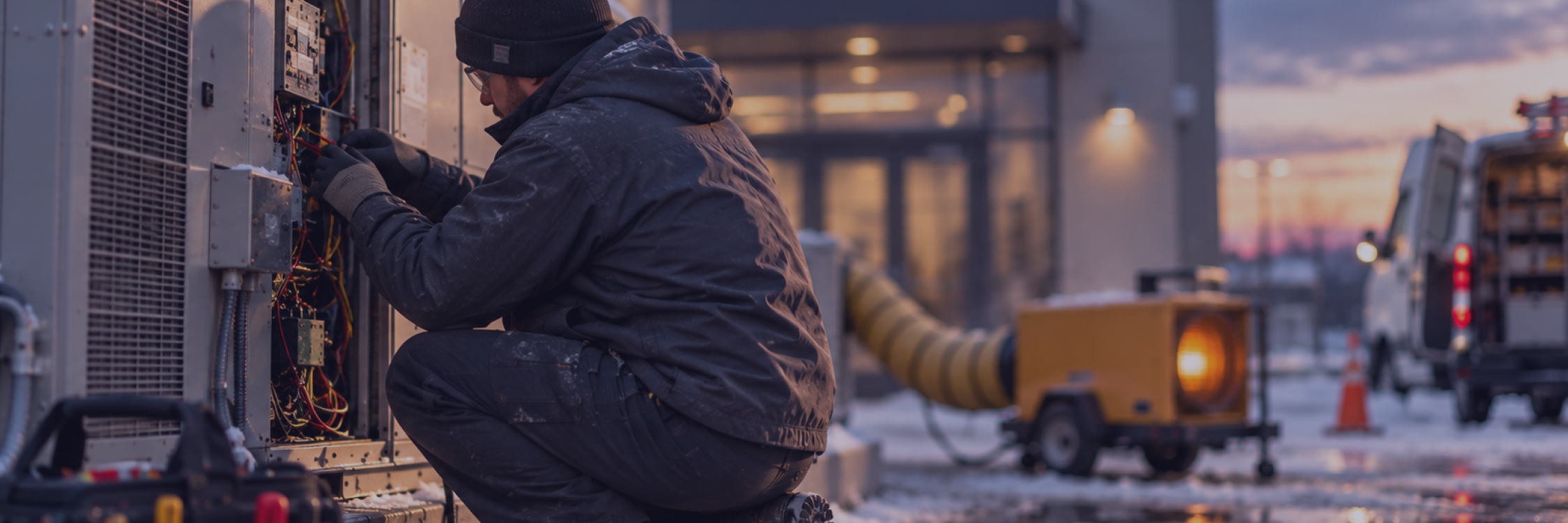

When a commercial heating system fails without warning, the repair invoice is rarely the real number. A single failure sets off a chain: emergency dispatch, after hours labor, a temporary heating unit while the actual fix gets scheduled, disruption to whatever the space is used for, and often a follow-up visit or two before the issue is fully resolved. None of that shows up as a single line item, which is part of why reactive HVAC management costs so much more than it looks like from any one repair.
For a single site, one emergency call might read as an occasional cost of doing business. Multiply that across a portfolio of fifty, two hundred, or a thousand locations, and reactive heating management becomes one of the least controllable cost centers a multi-site operator has, precisely because it's driven by whichever units happen to fail in whichever week, rather than by a plan anyone chose.
Independent industry data backs up how often that chain plays out. An annual downtime survey covered by ACHR News found that one in three multi-unit restaurant chains and institutions reported experiencing weekly HVAC outages, with half of all breakdowns resulting in $1,000 or more in lost revenue per day. The same coverage traced the root causes back to a familiar list: aging equipment, improper operation, and a lack of preventative maintenance, the exact gap a fall service pass is meant to close before it turns into a January emergency.
What the Data Shows About Reactive vs. Proactive
The gap between the two approaches is measurable. A Lessen preventative HVAC program saw 37% less spent per day on temporary HVAC units and 10% fewer reactive events, evidence that a portfolio doesn't have to wait for a failure to control this cost. In one larger program built on stronger alignment with its service partner network, that same shift compounded further: a 50% reduction in reactive service volume, a 50% reduction in temporary heating and cooling spend, and more than $1 million in avoided emergency costs over the life of the program.
Why Winter Raises the Stakes
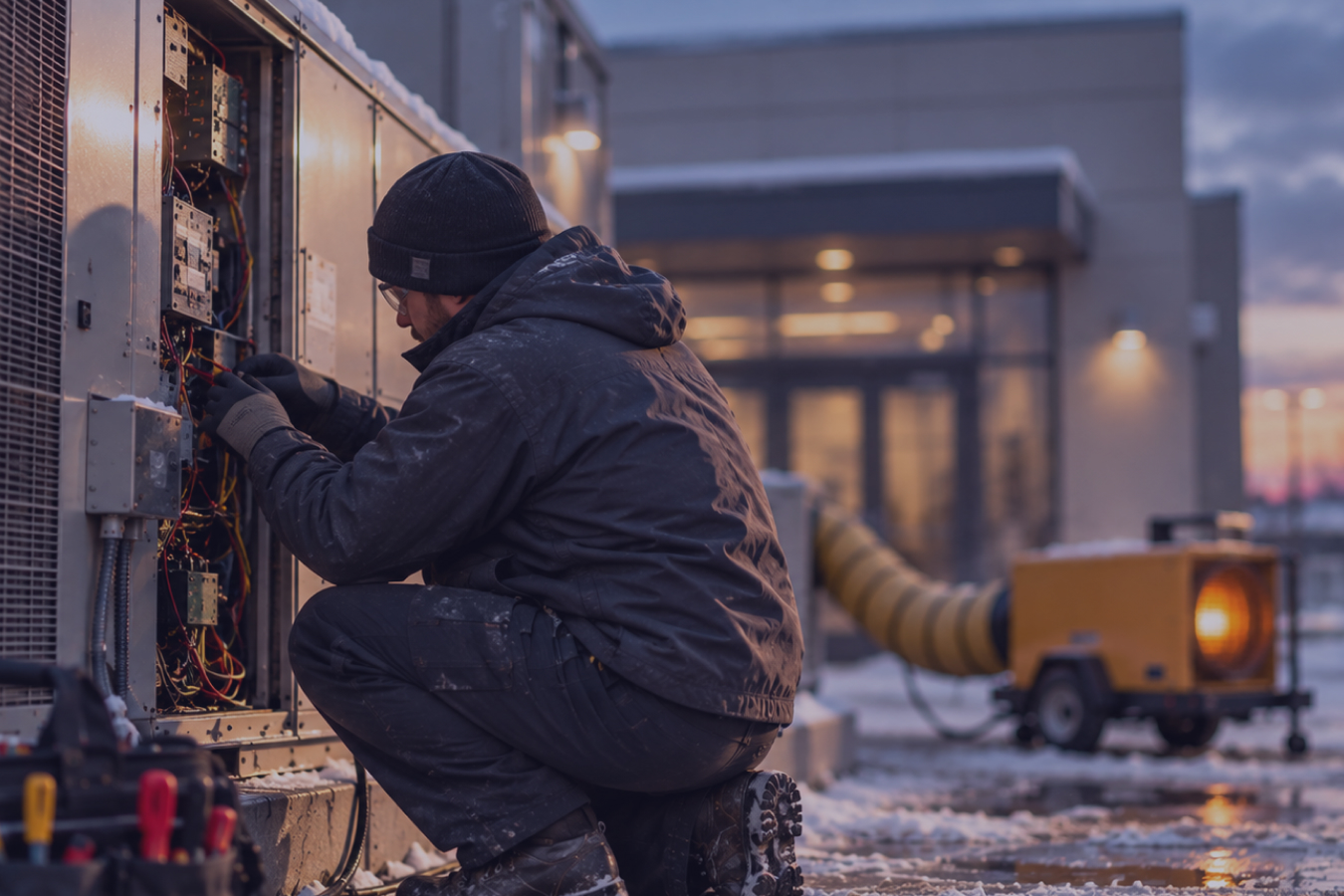
Winter compounds this cost specifically. Per Lessen's own seasonal maintenance guidance, equipment failures during heating season are more urgent by nature, and conditions like snow, ice, and limited site access can delay a service response right when a building needs one most. A repair that would have been routine in October becomes an afterhours emergency dispatch in January, at a premium, with a facility that has no heat until someone can get there. The cost isn't just the labor rate at 2 a.m., it's every hour the space is unusable while the portfolio waits for a technician who can safely reach the site.
The premium on that dispatch is measurable, too. An analysis of commercial HVAC service pricing by Samsara found that diagnostic and service fees can rise well above standard rates during peak demand periods, and that emergency dispatch rates can double or triple during the busiest stretches of the season, on top of whatever the underlying repair costs.
There's a second cost to reactive management that's easy to overlook: unpredictability itself. A maintenance budget built around planned preventative work is a number a facilities team can forecast and defend. A budget that has to absorb whatever emergencies happen to occur that quarter is not, and every unplanned emergency dispatch makes the next budget conversation harder to have with confidence.
The Lifecycle Alternative
The alternative to absorbing that cost repeatedly is treating preventative maintenance as a connected lifecycle rather than a recurring service event. That means assessing each site and establishing a real baseline, tagging and capturing asset condition and history so equipment is managed as a portfolio rather than a stream of disconnected repairs, standardizing field execution so inspections and corrective work are consistent across every location, adding continuous monitoring so problems surface between scheduled visits instead of at the point of failure, and connecting all of it to lifecycle planning so replacement decisions get made proactively instead of during an emergency. Each stage makes the next one more effective, which is why portfolios that adopt the full model see compounding results rather than a one-time improvement.
Running that model across a distributed portfolio depends on execution as much as strategy. A service partner network aligned around the same preventative-first approach and consistent scopes across locations is what turns a lifecycle framework into a program that actually reduces reactive calls.
The math holds regardless of portfolio size. Every reactive event avoided removes an unplanned dispatch, an afterhours labor charge, and a temporary unit rental from that quarter's numbers, and it does so before any of those costs are incurred rather than after. That's the actual return on a preventative maintenance program: not a single large number attached to a single event, but a steady reduction in exactly the costs that make an HVAC budget hardest to plan around.
Beyond avoided emergencies, that same discipline shows up in energy performance. Across a national program spanning more than 1,500 sites, this lifecycle approach was associated with a 21 million kWh reduction and roughly $3.34 million in energy savings, the kind of number that only becomes visible once equipment is running the way it's supposed to, rather than compensating for a problem no one has diagnosed yet.
The full breakdown of that lifecycle model, and the reasoning behind each stage, is in The Full Lifecycle of Preventative Maintenance, Lessen's guide to moving a commercial HVAC program from reactive to proactive.
Reactive heating repairs cost more than any single invoice shows, and that gap only widens across a portfolio of real size, especially once winter weather turns a routine fix into an emergency dispatch. Lessen's commercial HVAC maintenance services are built around the lifecycle model that closes that gap, from baseline assessment through continuous monitoring, so planned preventative work replaces emergency calls before winter raises the stakes.
See how Lessen turns reactive HVAC spend into a planned maintenance program →
- This is my list