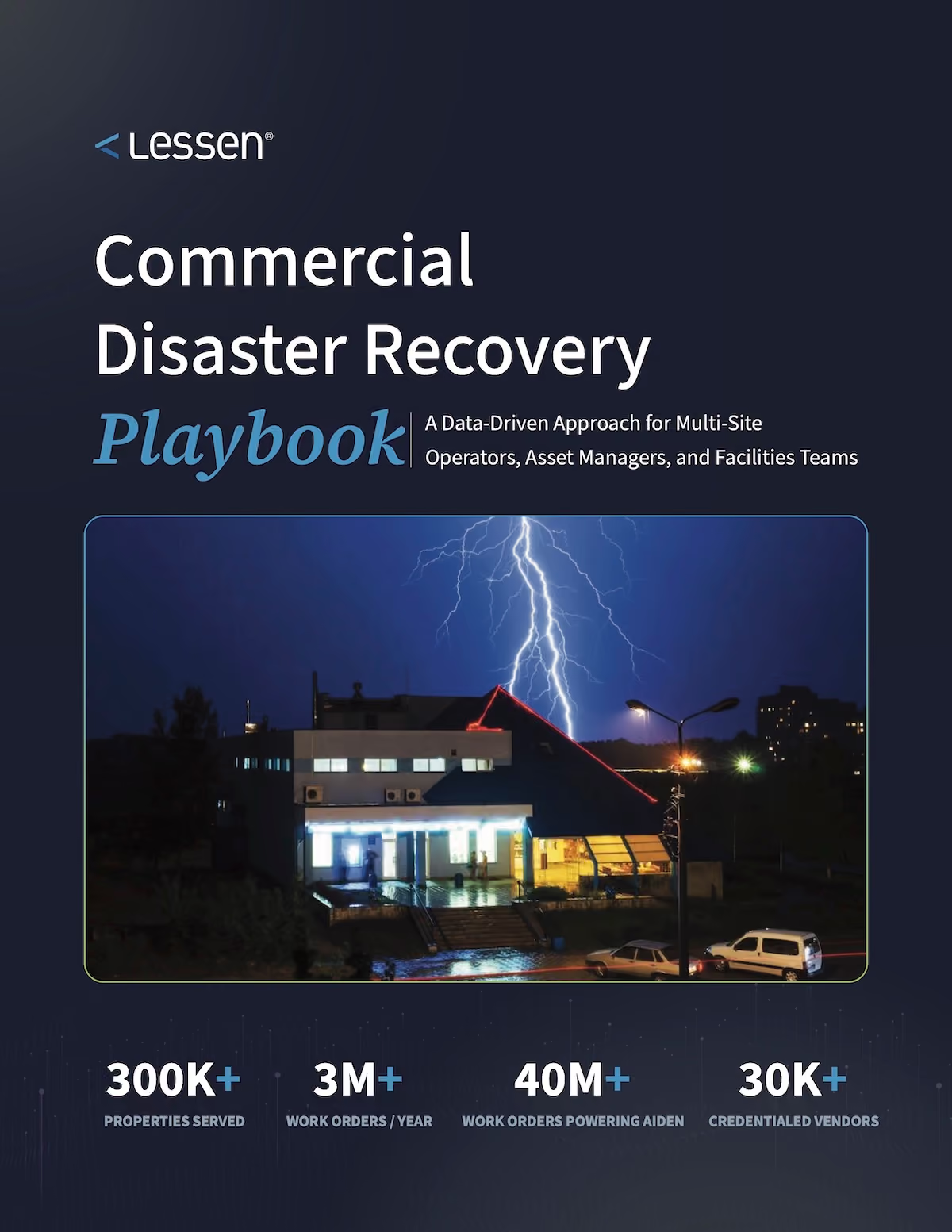
Commercial Disaster Recovery Playbook
A Data-Driven Approach for Multi-Site Operators, Asset Managers, and Facilities Teams
For multi-site operators and asset managers, disaster response rarely fails because a storm arrived. It fails when vendor sourcing starts after the event, when risk is mapped at the regional level instead of the asset level, and when multi-trade work goes uncoordinated, producing rework and extended timelines.
This playbook lays out the response framework that separates portfolios that recover in days from those still coordinating vendors two weeks later: asset-level risk mapping, pre-staged vendor networks, correctly sequenced multi-trade recovery, and documentation built for both insurance and tenant-facing requirements.
What's Inside?
A closer look at what's covered
- Seasonal checklists for Spring (pre-cooling), Summer (peak cooling), Fall (pre-heating), and Winter (heating season) aligned to when systems face peak stress
- Tasks organized into Critical Performance, Efficiency & Lifecycle, and Reliability & Risk categories for clear prioritization every season
- Recommended maintenance frequencies tied to seasonal demand cycles, including filter change intervals and condensate drain inspection cadences
- What to prioritize during seasonal transitions — the highest-risk windows when heating and cooling components exchange priority
- How to use extended system runtime as an early warning signal for airflow restrictions, refrigerant imbalance, and component wear
Key Takeaways:
What portfolio operators take from this resource
- Spring and Fall are the two highest-value intervention windows — full preventative maintenance at each seasonal transition is the baseline for reducing reactive exposure
- Reactive HVAC failures during peak demand are rarely sudden, they develop from unresolved performance issues that compound under sustained runtime
- One Lessen-managed national retail portfolio using a structured PM program saw 37% fewer comfort-related service calls and 65% of work completed proactively
- A checklist standardizes the task layer. Consistent outcomes across a portfolio require centralized coordination, standardized execution, and asset visibility alongside it
- 133,000+ labor hours executed proactively across one portfolio, driving 17% fewer sites requiring reactive service during peak season
What's Inside
A closer look at what's covered
- The commercial response framework, from pre-event risk mapping through multi-trade recovery sequencing
- Why disaster response work carries 1.9x the invoice value of standard repair and maintenance work, and where that premium actually concentrates by trade
- The four commercial-specific failure modes, including sequential post-event activation and multi-trade sequencing failures that trigger costly rework
- How asset-level data, not regional forecasts, determines which properties in the same storm track face the highest disruption risk
- The insurance and tenant documentation standard built for institutional occupants with SLA-level recovery expectations

Key Takeaways
What multi-site operators take from this resource
- In 2024, the U.S. experienced 27 weather and climate disasters each exceeding $1 billion in damages, totaling $182.7 billion
- The average business interruption claim exceeded $4.1 million, and each day of downtime costs a firm roughly 0.5% of annual revenue
- Commercial insurance premiums in Florida and Texas have risen as much as 200% since 2018, with insurance now representing up to 13% of total property revenue at the most-impacted properties
.avif)
Download PlaybookCommercial Disaster Recovery